
Thousands of ships start their journey across the world’s waters every morning before the sun rises over Singapore’s busy harbour. They transport the unseen threads that bind civilizations together, such as wheat for bread, steel for structures, and medication for medical institutions. However, the majority of people barely ever consider this liquid expressway that keeps modern life going. The 5,000-year-old human-sea connection, which is always changing, provides the framework in which the maritime business operates. This long-standing business is undergoing its most significant change since steam took the place of sail. There must be responses to climate change. Thanks to digital technology, possibilities that were previously only found in science fiction are now feasible. Trade routes are suddenly changed by geopolitical conflicts.
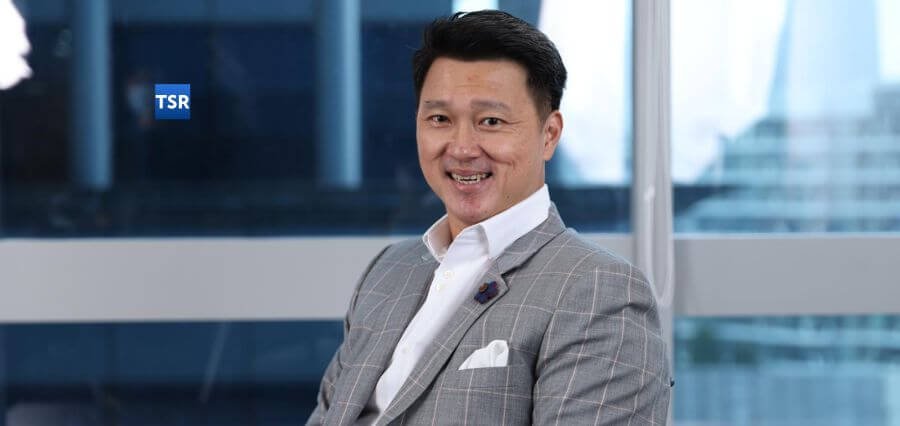
Into this swirling convergence of challenge and opportunity steps Gavin Tan, Chief Marketing Officer at Vallianz Offshore Marine, a visionary who blends tradition with radical innovation. His story isn’t simply about managing vessels or optimizing logistics. It’s about reimagining what leadership means when your office spans oceans, when your decisions ripple across continents, and when the very DNA of your industry undergoes transformation. This is the story of a man who learned to navigate by stars, not waves.
From Operator to Orchestra Conductor
Gavin didn’t always see leadership as an art of vision-setting. His early career unfolded in the trenches of maritime operations, where leadership meant solving immediate crises. Port schedules demanded precision. Maintenance issues required quick fixes. In those formative years, Gavin measured his worth by his technical expertise and hands-on presence. He believes one cannot truly command the ship without understanding its mechanics.
Yet somewhere along his journey, a realization crystallized: managing daily waves ensures short-term stability, but it never achieves long-term greatness. The metaphor he uses now, “Navigating by the Stars, Not Just the Waves”, captures this evolution. Stars remain constant, providing true north when storms obscure the horizon.
Today, Gavin orchestrates rather than operates. He sets destinations with crystalline clarity, then empowers his team to chart the course. He provides the “why” and the “where,” trusting his crew with the “how.” This shift transforms everything. Teams stop waiting for instructions and start taking ownership. Innovation flourishes because people feel authorized to experiment. The transformation required Gavin to release control and accept that his value lay not in having all the answers but in asking the right questions.
Reading Tomorrow’s Weather Today
Gavin watches the maritime industry with meteorological intensity. His analysis centers on what he calls a fundamental triad: intelligent systems, sustainable fuels, and dynamic resilience. These aren’t separate trends but interconnected forces reshaping the industry’s foundation.
Artificial intelligence evolves beyond a tool for optimization. It becomes the nervous system of a new maritime ecosystem, predicting problems before they manifest, adjusting routes in real-time, and transforming overwhelming data into actionable wisdom. Ships become not just connected but cognitive.
Simultaneously, the decarbonization mandate triggers the most dramatic energy shift since steam replaced sail. Green methanol and ammonia aren’t fringe experiments; they’re the future rewriting vessel design and global fuel logistics. These forces converge on resilience. Geopolitical tensions reroute trade flows overnight. Climate events disrupt schedules. The ability to adapt dynamically separates survivors from casualties. This systems-level thinking allows him to position Vallianz for the market emerging five years hence.
The Crucible That Forged Conviction
Crisis reveals character. For Gavin, the offshore oil downturn from 2015 to 2017 provided that revelation. This wasn’t a cyclical dip; it was a fundamental market collapse. Freight rates plummeted. Companies haemorrhaged cash and jobs.
When Gavin’s team discussed their response, the obvious path beckoned: slash costs, protect the balance sheet, and survive until recovery. Yet Gavin felt this approach would destroy something irreplaceable- the expertise, relationships, and culture that made Vallianz excellent.
He proposed an alternative that seemed almost reckless: protect the core team, double down on operational innovation, redesign workflows for maximum efficiency rather than simply cutting budgets. This meant sleepless nights wondering if the bet would pay off.
The period tested every ounce of conviction. Markets kept deteriorating. Competitors announced layoffs. Yet he held firm. When the market stabilized, Vallianz emerged stronger because it retained capabilities that competitors spent years rebuilding.
This experience crystallized a leadership principle Gavin carries today: in crisis, invest in people first. Lose your team’s capability and morale, and no amount of preserved capital compensates.
Weaving the Global Maritime Fabric
Gavin views Vallianz as connective tissue within the global maritime network, strengthening the entire ecosystem. In every region from the Middle East to Southeast Asia, the company forges genuine partnerships with local talent while maintaining consistent, data-driven frameworks, ensuring excellence doesn’t vary by geography.
Vallianz builds “collaborative advantage” into operations, sharing real-time data with partners to optimize berthing windows, co-developing training programs to build regional skill pools, and aligning sustainability goals with host nations. This approach requires sophisticated navigation between standardization and local adaptation. Gavin understands that competitive advantage increasingly comes from ecosystem strength rather than individual capability alone.
When Green Becomes Gold
Gavin has transformed sustainability into Vallianz’s strategic cornerstone- the lens through which every major decision passes. Vallianz aggressively integrates AI-driven voyage planning that maximizes fuel efficiency. Routes adjust dynamically based on weather, currents, and fuel prices. Less fuel burned means lower costs and reduced emissions simultaneously.
But Gavin’s vision extends beyond present optimization. The company makes strategic investments in future-fuel-ready vessels, preparing for a world where green methanol and ammonia power maritime transport. The company actively collaborates across supply chains to develop green corridors where collective action lifts industry standards.
This perspective separates Gavin from executives who treat sustainability as a compliance exercise. He sees it as fundamental competitive repositioning. Regulatory environments increasingly penalize carbon-intensive operations. Companies that pioneer cleaner operations today secure advantages that compound over decades.
The approach also reflects personal values. His connection to Singapore’s maritime heritage and the ocean runs deep. Sustainability isn’t an abstract duty; it’s stewardship of something he loves, ensuring his children inherit thriving oceans and a maritime industry that serves humanity without destroying nature.
Engineering Growth, Not Hoping for It
Many organizations claim to value talent development. Few systematically engineer it. Gavin’s approach rests on three pillars.
Stretch assignments form the first pillar. Vallianz places high-potential individuals on cross-functional projects that challenge current skills while demanding new ones, building future leaders who can integrate diverse perspectives and make decisions with incomplete information.
Innovation as a key performance indicator forms the second pillar. Vallianz asks every team leader: “What new process or idea did your team test this quarter?” This signals that creative problem-solving matters as much as executing existing processes.
Leading with vulnerability forms the third pillar. Gavin deliberately shares challenges alongside wins. When he doesn’t know something, he says so. This creates psychological safety, the foundation for genuine accountability.
Technology That Empowers, Not Replaces
Gavin calls his vision “Ambient Intelligence”: technology working seamlessly in the background to amplify human capability. For Vallianz, this means leveraging AI for predictive maintenance that prevents equipment failures before they occur. Sensors analyze patterns indicating emerging problems. Crews receive alerts with specific recommendations, allowing pre-emptive action.
It also means using integrated data platforms that transform information overload into actionable insights. With ambient intelligence, overwhelming data gets synthesized into clear recommendations. Vallianz doesn’t automate the seafarer; it arms them with foresight previously impossible. The synergy between human skill and digital tool creates a competitive advantage difficult for rivals to replicate.
The Balance Between Heritage and Horizon
Maritime tradition runs deep- thousands of years of accumulated wisdom. Modern innovation rushes forward- AI, alternative fuels, and autonomous systems. Gavin choreographs their dance.
He describes the “maritime mind” with reverence- the operational discipline that keeps crews safe, the seamanship that navigates storms. These traditions represent a non-negotiable heritage that Vallianz preserves through rigorous training and mentorship.
Yet Vallianz pursues aggressive modernization. The key lies in “contextualizing innovation“- showing how new tools enhance rather than replace traditional skills. Vallianz runs exercises where teams solve problems using both high-tech and traditional methods. This ensures digital systems complement fundamental seamanship. If technology fails, crews revert to traditional methods.
This synthesis creates organizational DNA with two strands: timeless maritime wisdom and relentless innovation drive. The combination creates resilience. Organizations rooted solely in tradition become obsolete. Organizations pursuing innovation without respecting heritage lose crucial safety culture. Vallianz achieves both.
The Personal Compass
Understanding Gavin’s professional mission requires understanding his personal connection to the sea. Growing up in Singapore, he witnessed a small island nation connected to the entire world through maritime threads. Ships arriving in port carried not just cargo, but possibilities as well.
That childhood wonder transformed into stewardship. Gavin sees maritime work as fundamentally human enterprise. Vallianz doesn’t move boxes; it moves prosperity, energy for hospitals, and food for tables. Every container represents someone’s livelihood; every vessel connects humanity across distances.
He views his role not merely as a director pursuing profit but as a steward ensuring this vital industry evolves responsibly. His genuine care for maritime heritage and environmental stewardship gives him the courage to prioritize impact over immediate returns.
Envisioning the Industry’s North Star
Gavin projects a compelling vision for maritime’s future. He sees the industry transforming from a traditional backbone into a dynamic central nervous system, anticipating needs before they arise, healing disruptions through rapid adaptation, and operating with quiet efficiency that leaves a minimal environmental footprint.
The legacy he hopes to leave centers on mindset transformation. He wants to shift industry conversations from “Can we do this?” to “How soon can we make it better?” This subtle shift carries profound implications. The first assumes limitation. The second assumes possibility and pursues execution.
If Gavin is remembered for instilling this mindset, relentless optimism merged with practical execution, and for keeping people at the heart of technological progress, he will consider his leadership successful.
The Captain’s True Compass
Gavin represents maritime leadership reimagined for an era of transformation. At Vallianz Offshore Marine, he builds an organization honouring tradition while embracing innovation, prioritizing people alongside profits, viewing sustainability as an opportunity rather than a constraint.
His philosophy, navigating by stars rather than waves, captures the essential challenge modern maritime leaders face. Daily waves demand attention; distant stars provide direction. Great leaders manage both. As global trade grows complex and technology reshapes possibilities, maritime needs more leaders like Gavin. Such people combine technical expertise with strategic vision, investing in people during a crisis and building bridges across cultures.
His story offers inspiration and instruction. Leadership isn’t about having all the answers; it’s about asking the right questions. Success isn’t measured in short-term profits but in sustained positive impact. The greatest legacy isn’t personal achievement but collective advancement toward shared purpose.
The maritime industry connects our world. Leaders like Gavin ensure those connections grow stronger, cleaner, and more resilient. He navigates by stars because stars remain constant when everything else shifts. And in an industry facing its most profound transformation in centuries, that steady guidance toward a better horizon becomes invaluable.
The voyage continues. The stars shine bright. And the captain knows exactly where he’s heading.
Read Also : From the Pages of “The New Me” to Gagan Dhawan’s Mission to Make Life Better, One Choice at a Time